You’ve optimized your meta tags, and you’ve written keyword-rich content. You’ve run technical audits and fixed every crawl error. Yet somehow, your competitor — with a thinner content library and a younger site — still outranks you. Sound familiar?
The variable you may be underestimating is Domain Authority (DA). While it’s not an official Google metric, DA is one of the most reliable predictors of where your pages will land in the SERPs. For SEO professionals, understanding and strategically building DA isn’t optional — it’s foundational.
What Exactly Is Domain Authority?
Domain Authority is a logarithmic score (1–100) developed by Moz that predicts how likely a domain is to rank in search engine results. Higher scores signal stronger ranking potential. The score is calculated using dozens of factors, but the two heaviest contributors are:
- The number and quality of inbound links pointing to your domain (link equity)
- The overall link profile diversity — root domains, anchor text variety, relevance
It’s important to distinguish DA from Page Authority (PA). DA measures the entire domain’s strength; PA is page-specific. For brand awareness and long-term SEO, growing DA is the strategic priority.
Also Read


Why DA Is the Hidden Force in Google Rankings
Google’s algorithm evaluates over 200 ranking signals. But at the core of almost all of them is trust and authority — which DA approximates better than most third-party metrics. Here’s why DA matters at a technical level:
1. Link Equity Flows From High-DA Domains
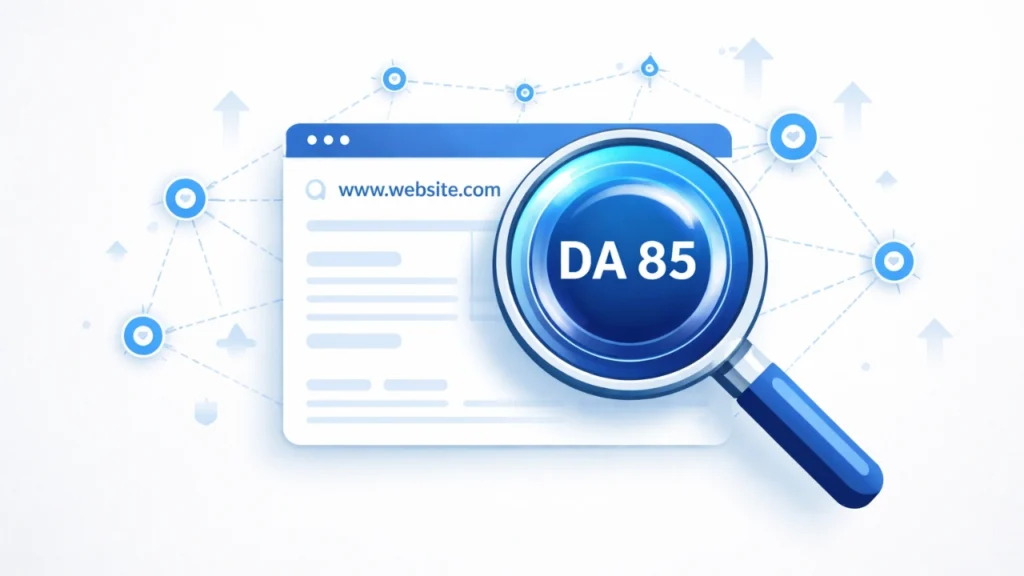
When a DA 85 website links to yours, it passes significantly more PageRank signal than a DA 20 site. Building backlinks from authoritative domains creates a compounding effect — each quality link raises your DA, which in turn makes your pages rank better, attracting even more organic links.
2. DA Correlates With Crawl Prioritization
Googlebot allocates crawl budget based on perceived site importance. Higher-DA domains tend to get crawled more frequently and deeply, meaning new content gets indexed faster. For SEO professionals managing large sites, this is a critical operational advantage.
3. DA Affects Competitive Gap Analysis
When auditing a new client or evaluating a keyword opportunity, the DA of ranking competitors immediately tells you the effort threshold required. Targeting a keyword dominated by DA 70+ sites with a DA 25 domain — without a robust link-building plan — is a resource drain.
| Pro Insight DA is a relative metric. A DA of 40 may be highly competitive in a niche industry, while a DA 60 may be average in finance or SaaS. Always benchmark against your specific competitive landscape — not against absolute score thresholds. |
The DA–Traffic Relationship: What the Data Shows
Multiple industry studies consistently show a strong positive correlation between domain authority and organic traffic. Domains in the DA 50–70 range typically attract 3–5x more organic traffic than DA 20–40 domains targeting similar keywords. The compounding effect accelerates above DA 70.
This is because high-DA sites:
- Rank faster for new content (trust signals already established)
- Retain rankings more stably during Google algorithm updates
- Win featured snippets and SERP features at higher rates
- Attract passive backlinks naturally due to perceived authority
How to Strategically Build Domain Authority
Building DA is not a sprint — it’s a long-term compounding strategy. Here are the highest-leverage tactics used by top SEO professionals:
1. Earn Editorial Backlinks Through Original Research
Data-driven content — industry surveys, proprietary studies, benchmark reports — earns the highest-quality editorial backlinks. When your domain is the primary source of cited data, other sites organically link back, raising your DA with minimal outreach overhead.
2. Execute Targeted Digital PR Campaigns
Partner with PR professionals to place thought-leadership content in industry publications (DA 70+). A single feature in a top-tier outlet can move your DA by 2–4 points — more than months of incremental outreach.
3. Audit and Disavow Toxic Links
Negative SEO and legacy spammy links actively suppress DA. Use Moz’s Link Explorer or Ahrefs to regularly audit your backlink profile and submit disavow files for low-quality, irrelevant, or manipulative links.
4. Build Internal Link Architecture Strategically
Internal links distribute link equity across your domain. Implement a hub-and-spoke model where pillar pages consolidate authority and pass it to supporting content. This amplifies the DA value of each external backlink you earn.
5. Prioritize Link Diversity Over Volume
1,000 backlinks from 10 domains is weaker than 200 backlinks from 200 unique root domains. The Moz algorithm heavily weights root domain diversity. Pursue links from a wide range of relevant, authoritative sites across different TLDs and industries.
6. Leverage AI-Powered Backlink Exchange Platforms Like LinkRhinos
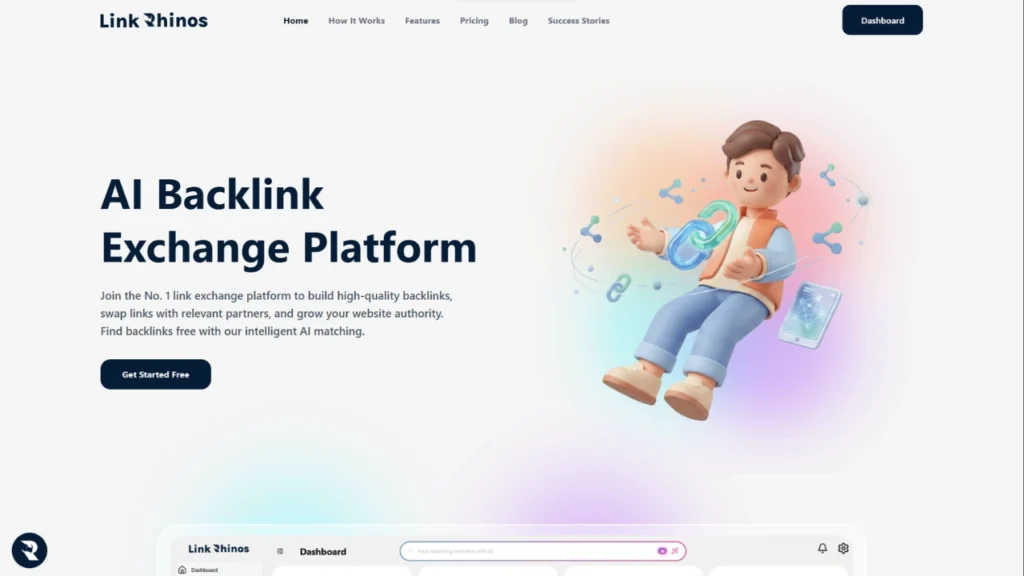
Manual outreach for backlink exchange is time-intensive and often inconsistent. This is where AI-powered platforms are changing the game. LinkRhinos is a smart backlink exchange network built specifically for website owners, bloggers, and digital marketers who want to grow their SEO rankings through safe, high-quality, and reciprocal backlinks — without the manual grind.
What makes LinkRhinos stand out for SEO professionals is its AI-driven matchmaking. Instead of cold emailing dozens of webmasters and hoping for a reply, the platform intelligently connects you with relevant, high-DA domains in your niche — ensuring every backlink exchange is contextually appropriate and SEO-safe.
| Feature | What It Means for Your DA Strategy |
| AI Niche Matching | Connects you with domains relevant to your industry — keeping backlink exchanges contextual and Google-compliant |
| Reciprocal Backlinks | Safe, white-hat link swaps that build root domain diversity without triggering spam signals |
| Quality Filtering | Only high-quality domains pass through the network, protecting your link profile from toxic associations |
| Time Efficiency | Automates the most tedious part of link building — prospecting and outreach — so you focus on strategy |
For SEO professionals managing multiple client domains or their own growing sites, LinkRhinos offers a scalable, algorithm-safe way to add root domain diversity — one of the most important DA growth levers — without compromising link quality.
Explore LinkRhinos at linkrhinos.com and start building smarter backlinks today.
Common DA Misconceptions Among SEO Professionals
Myth: DA is a Google metric
Reality: DA is Moz’s proprietary score. Google does not use DA in its algorithm — but high DA is highly correlated with the trust signals Google does measure.
Myth: Higher DA always means better rankings
Reality: DA is domain-level. A high-DA domain with poorly optimized pages can still lose to a lower-DA site with a highly relevant, well-optimized page.
Myth: DA changes are immediate
Reality: DA is recalculated periodically by Moz. Significant link-building campaigns may take 60–90 days to reflect in DA scores.
Myth: Paid links are a fast DA shortcut
Reality: Google’s Spam team actively targets paid link schemes. A manual penalty doesn’t just stall DA — it can demolish the entire domain’s organic visibility.
Measuring DA Progress: The Right KPIs
DA alone is not enough. Pair it with these metrics for a complete picture of your authority-building progress:
- Referring Domain Count — track growth in unique linking root domains
- Organic Traffic by Keyword Cluster — correlate DA improvements with ranking movement
- Link Velocity — monitor the rate of new quality backlinks over time
- SERP Feature Wins — track featured snippets, PAA boxes as indicators of authority
- Branded Search Volume — rising DA often correlates with increased branded queries
Final Thoughts: Authority Is Earned, Not Bought
Domain Authority isn’t a vanity metric — it’s a diagnostic lens that reflects the cumulative trust your domain has built across the web. For SEO professionals, it’s one of the clearest signals of whether a content and link strategy is actually working.
The brands that win in organic search over the long term aren’t the ones spending the most on ads — they’re the ones who treated authority-building as a core pillar of their digital marketing strategy, consistently, from day one.
Start today. Audit your backlink profile. Identify your top 10 DA-gap competitors. Build a content plan centered on linkable assets. And watch DA — and everything it drives — compound over time.
Read our other blogs as well :